

Put the immediate action in the right place
Make a clearly labelled telephone action easy to find on mobile and show the service and coverage information nearby. If WhatsApp is offered, explain its place in the journey without implying it is a guaranteed emergency-response channel.
The website should not encourage someone to enter a long form while driving. Keep initial contact concise and leave recovery-safety advice and operational instructions to the appropriate authorities and the operator.
Service and location navigation should answer real questions
| Customer question | Content decision |
|---|---|
| Can you help with this vehicle or situation? | Clearly separate the services actually supplied and any relevant limitations. |
| Do you cover where I am? | Use accurate service-area information and relevant motorway/service coverage. |
| How do I get help? | Give telephone contact a clear label and a reliable mobile interaction. |
| What information will you need? | Explain the initial details the operator needs without collecting unnecessary data. |
The SM Recovery 24/7 example
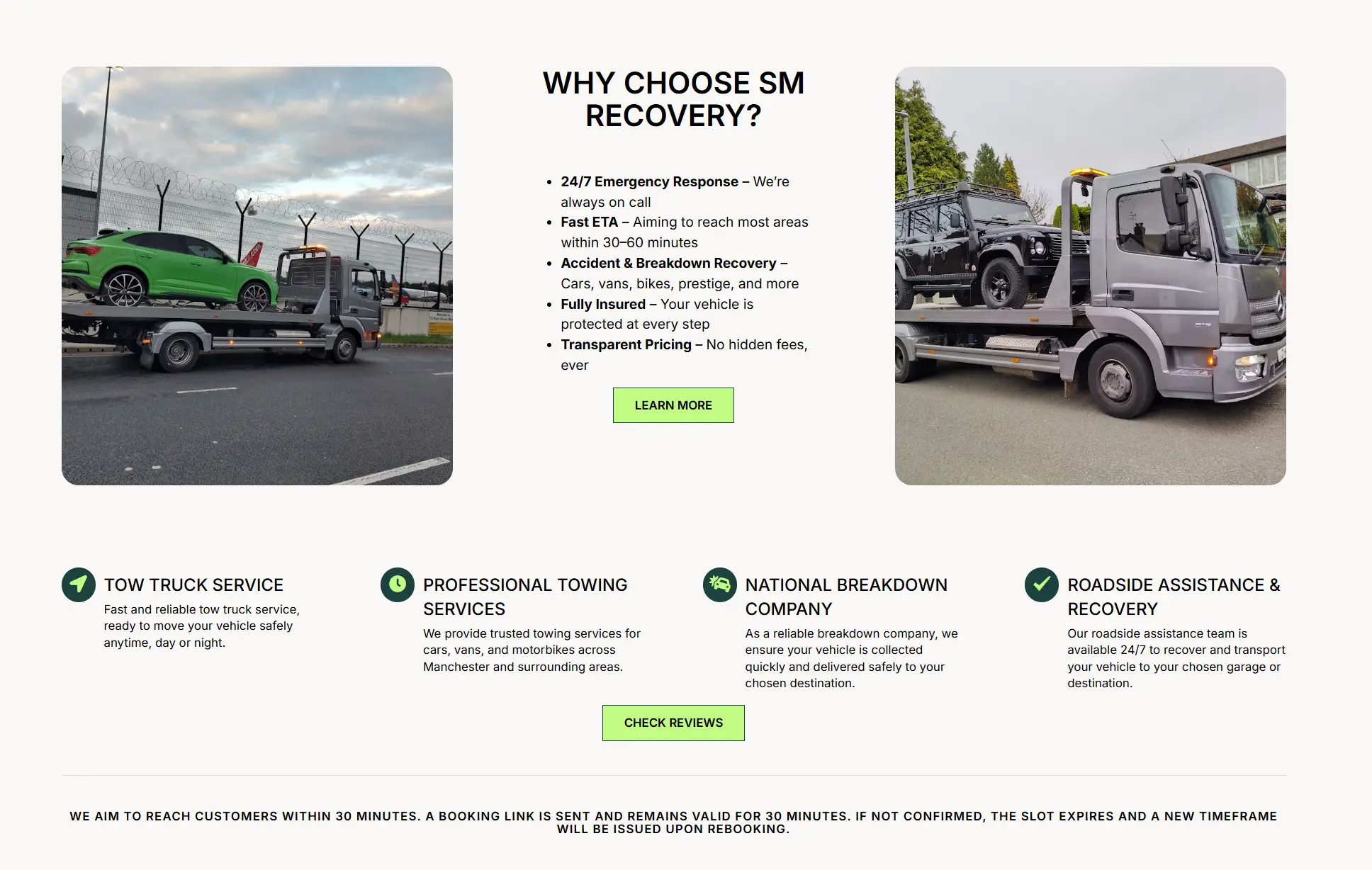
CodingPie’s existing case study describes a WordPress and Elementor rebuild for a Salford recovery business. It focuses on mobile users, service and coverage organisation and telephone/WhatsApp contact routes.
The transferable lesson is to organise content around the service and place a driver needs. It does not justify publishing a recovery location page for every town, and it is not evidence of a guaranteed ranking or enquiry increase.
Confirm the operating facts before design
- The services and vehicle types the operator can actually support.
- The real coverage, operating hours and contact arrangements.
- Approved images and any claims about response, equipment or experience.
- Who keeps coverage and contact information current.
- Whether the existing website has service or location URLs worth retaining.